The September Jobs Report Added Just 29,000 Jobs: How to Mark the October Data Dates That Matter to Your Portfolio in Four Steps

The September jobs report was soft. Nonfarm payrolls rose by 29,000, the unemployment rate was 4.2%, and the Bureau of Labor Statistics revised July and August down by a combined 60,000 jobs. A market analyst quoted by Yahoo Finance said the report helped reduce expectations for another Fed rate hike in October. Yet the 10-year Treasury yield was still about 5.30% on Monday, October 5. One report moved the odds without settling them, and the coming weeks hold more scheduled events that can move them again.
What the September Jobs Report Said
Beyond the 29,000 headline, average hourly earnings edged up 5 cents, or 0.1%, to $37.81, which is 3.0% higher than a year earlier. The revisions matter as much as the headline. July was cut by 31,000 jobs and August by 29,000, so hiring before September was weaker than first reported.
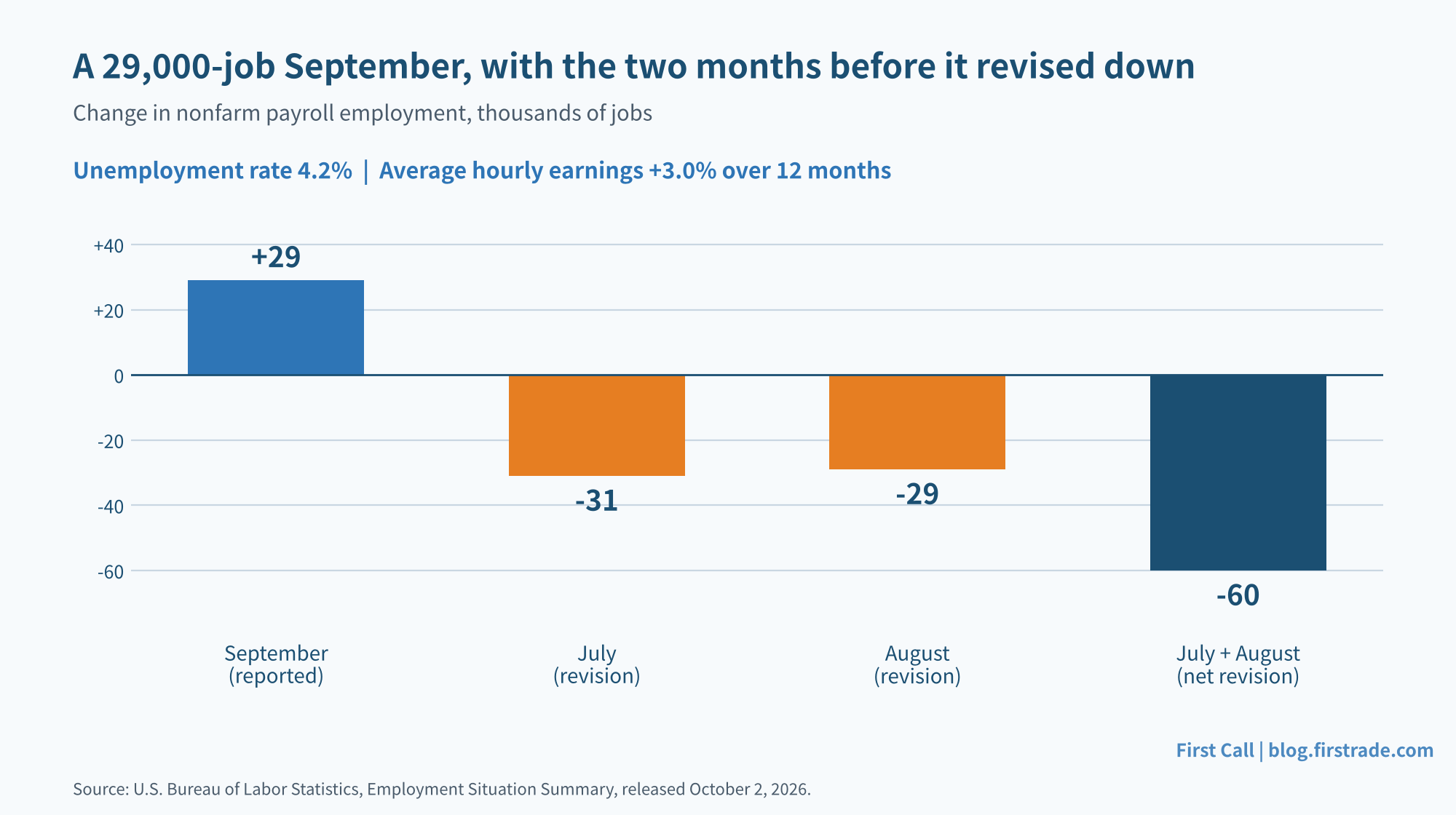
Chart 1: September payroll change and the revisions to July and August (thousands of jobs). Source: U.S. Bureau of Labor Statistics, released October 2, 2026.
Keep in mind that the September figure is a first estimate, not a final count. Monthly employment figures are revised as more data arrives, so the September number itself may change in a later release.
Markets were mixed on Monday, October 5. According to the Yahoo Finance market wrap, the S&P 500 rose 0.40% to 7,753.66 and the Nasdaq gained 0.64%, while the Dow slipped 0.11%. Crude oil was at $89.63 a barrel, and the wrap described rising bond yields as offsetting the softer employment data. The yield level is the part worth keeping in view through the rest of this article, because it is what the dates below can move.
What It Means for a Portfolio
Rate expectations reach a portfolio through yields. When yields move, the price of a bond fund moves the opposite way, income on cash and money market holdings drifts with short-term rates, and the value the market places on stocks can shift as well. Which of your holdings behave this way is something only you can check. A yield near 5.30% also cuts both ways: it weighs on the price of bonds already held and raises the income on new money, which is why the same data release can read as good news for one holding and bad news for another. What the calendar can tell you is when the next push is scheduled. Three dates stand out: the Fed's minutes of its September meeting on Wednesday, October 7; September CPI on Wednesday, October 14 at 8:30 a.m. ET; and the FOMC meeting on October 27 and 28.
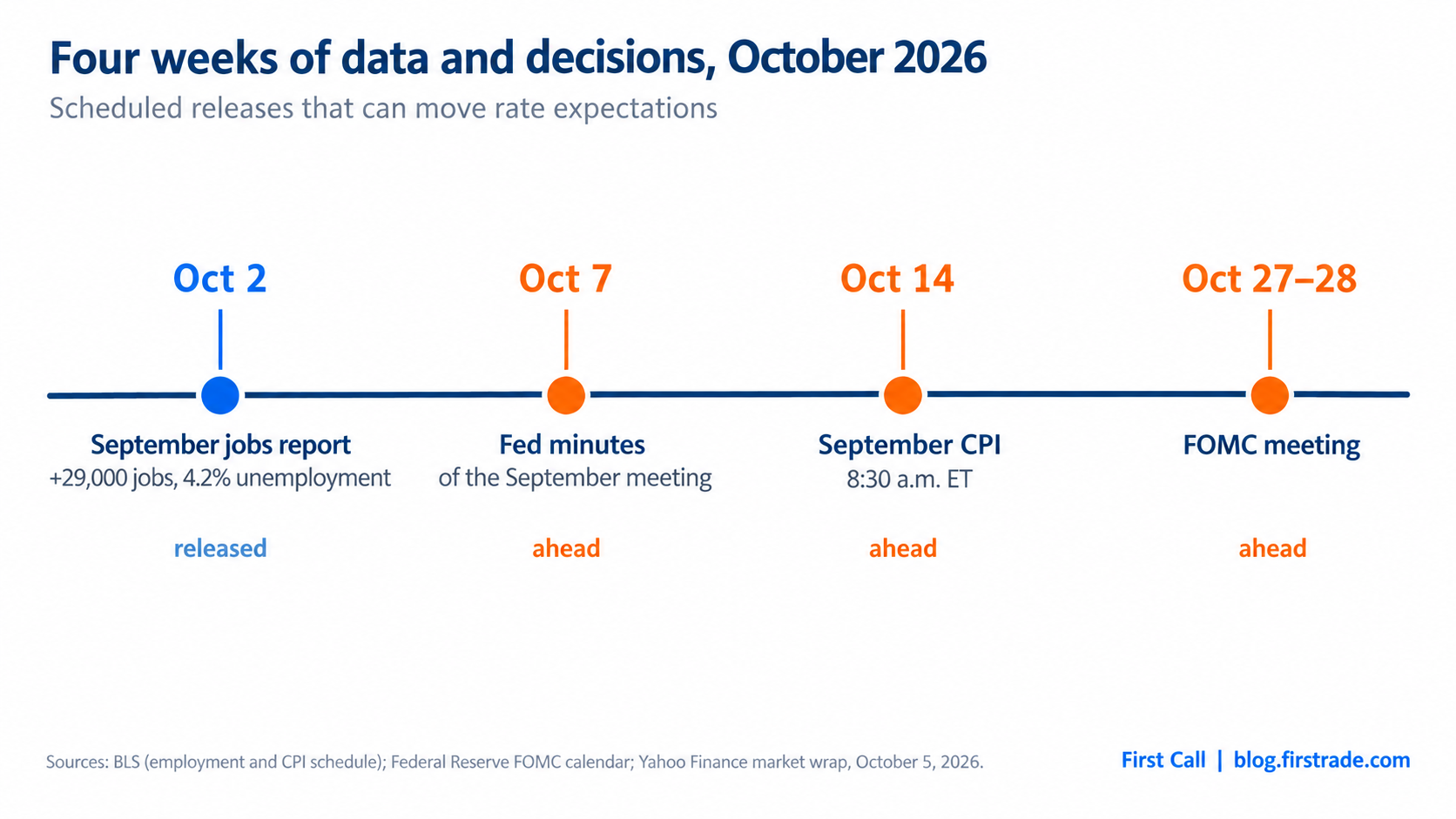
Chart 2: Scheduled data and policy events, October 2026. Sources: BLS, Federal Reserve, Yahoo Finance.
Marking those dates ahead of time turns a week of headlines into a short list of moments worth watching. Firstrade's research tools include an economic events calendar that covers economic indicators alongside earnings announcements, dividends and ratings changes.
What to Actually Do About It: Four Steps for the Next Four Weeks
A calendar helps only if you put something next to each date. The review below involves no trading and typically takes about half an hour.
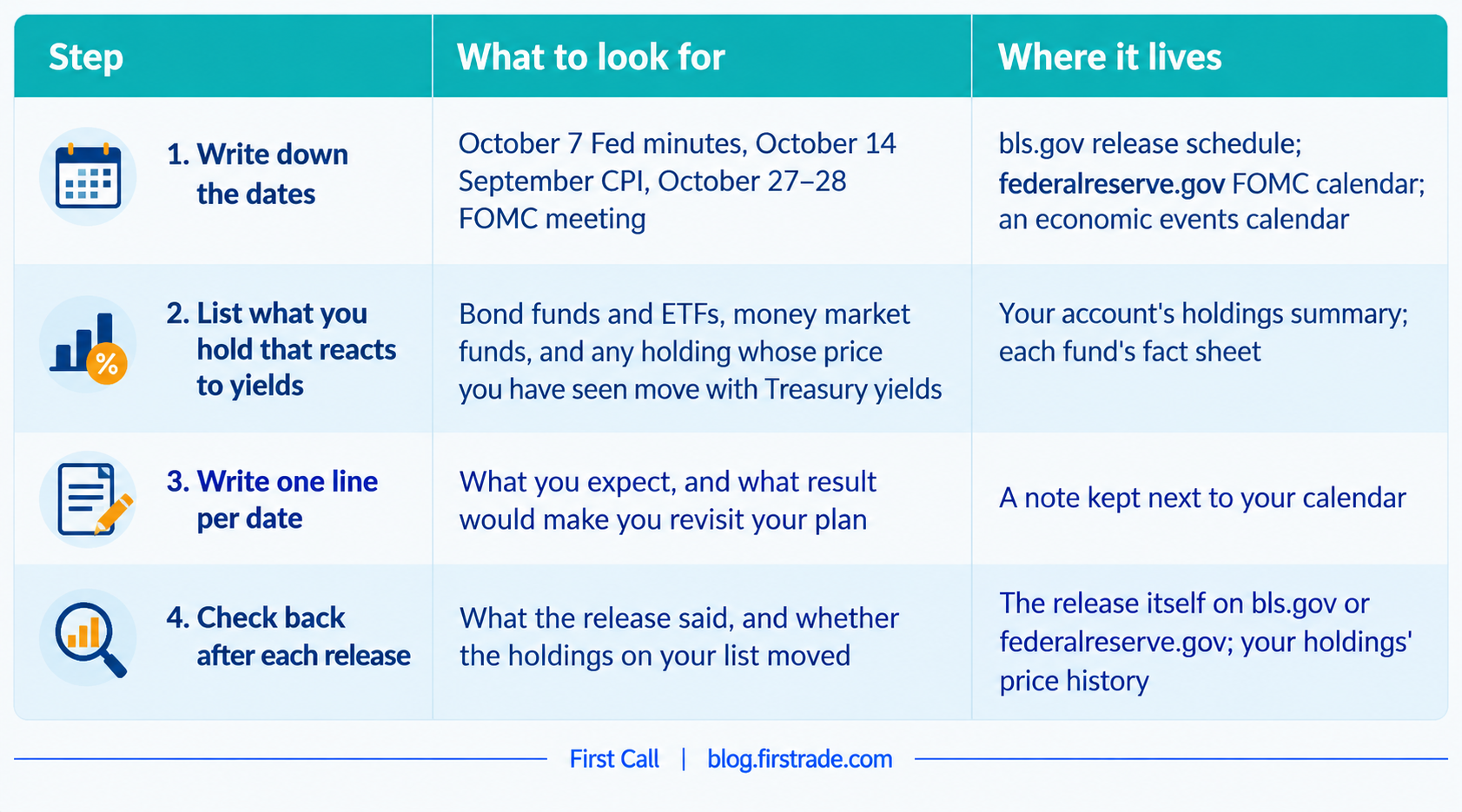
The point of writing the line before a release is that it is easy to rewrite your expectations afterward. Whether a result changes anything is a decision for later. If it does lead to an adjustment, the cost of making it is worth knowing in advance: online trades in U.S. stocks, ETFs, mutual funds and options are $0 commission at Firstrade, so a small change does not have to clear a commission first.
FAQ
Does one weak jobs report mean the Fed will not raise rates again?
Not by itself. A market analyst said the September report helped reduce expectations for an October hike, but the decision comes at the FOMC meeting on October 27 and 28, after September CPI is released on October 14.
What are the Fed minutes?
They are the written record of what policymakers discussed at the September 15-16 meeting, published after the meeting. They are scheduled for Wednesday, October 7.
Why were July and August revised?
The BLS report cut July by 31,000 jobs and August by 29,000. Revisions are a routine part of how monthly employment estimates are updated as more information comes in.
Do I need to trade around these dates?
No. A calendar tells you when information arrives, not what to do with it. The exercise above is about knowing which holdings to watch, and nothing in it is a signal to buy or sell.
The Bottom Line
Four dates and four short notes make up the whole exercise, and the notes are more useful when written before the data than after it. A Firstrade account can be opened online, and 24/7 customer service is there if a question comes up while you are building the list.
This article is for informational and educational purposes only and does not constitute investment, tax or legal advice, or a recommendation to buy or sell any security. Economic data, forecasts and market expectations are not guarantees of future results. All investing involves risks, including loss of principal. Firstrade Securities Inc. is a member of FINRA and SIPC.