
With 66 days left in 2026, most of this year's capital gains and losses are already on the books. What is still open is whether any position now sitting below its purchase price should be sold before December 31 to offset gains, and how the wash-sale rule's 61-day window changes the timing. Both rules are set out by the IRS and the tax code, both are mechanical, and both are easier to check in late October than on the last trading day of the year. This article lays out the rules in plain terms and ends with a four-step check you can do from your own statements.
How the Year-End Loss Rules Work
A gain or loss counts for tax only once a position is sold. Until then it is a paper figure. The IRS sorts each sale by holding period: held one year or less is short-term, held more than one year is long-term. Short-term results are netted against each other, long-term results against each other, and the two totals are then combined. A net short-term gain is taxed as ordinary income, which is why it matters which pile a loss lands in.
If losses exceed gains for the year, the IRS lets you deduct the lesser of $3,000 ($1,500 if married filing separately) or your total net loss against other income. A net loss above that limit is not wasted: it carries forward to later years. Chart 1 runs one example through those steps.
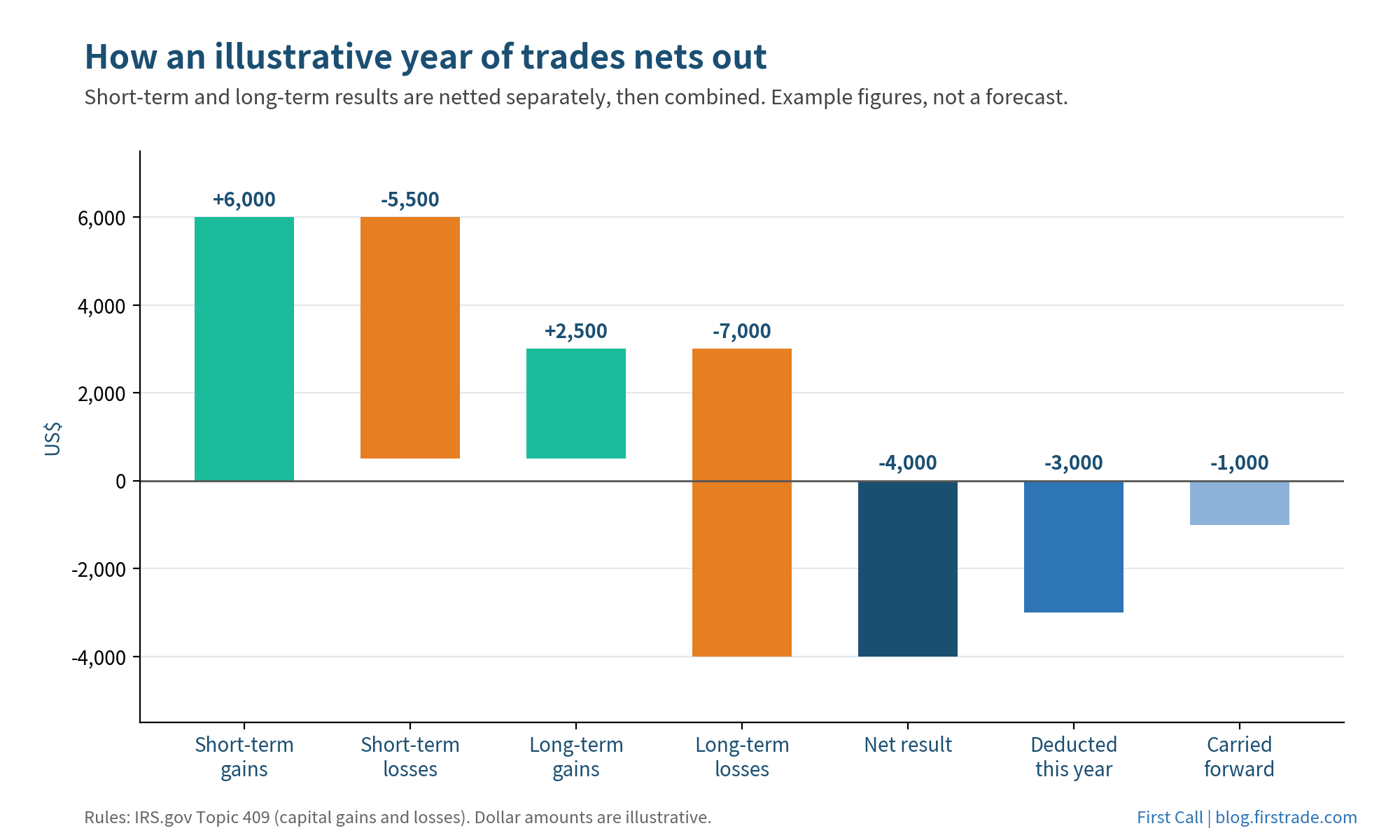
Chart 1: Illustrative year of trades. Source: Firstrade. Rules based on IRS.gov Topic 409; dollar amounts are hypothetical and for illustrative purposes only.
What the Rules Mean for the Positions You Already Hold
Most long-held positions were not bought in one go. A fund added to every few months has several purchase lots, each with its own cost basis and its own holding period, and within one fund some lots usually sit above their cost and some below. Which lots carry a loss, and whether those losses are short-term or long-term, decides what they can offset. Keeping that lot-level record straight is the unglamorous part of the job, and Firstrade offers tax tools provided by GainsKeeper that track capital gains, cost basis, losses and wash sales.
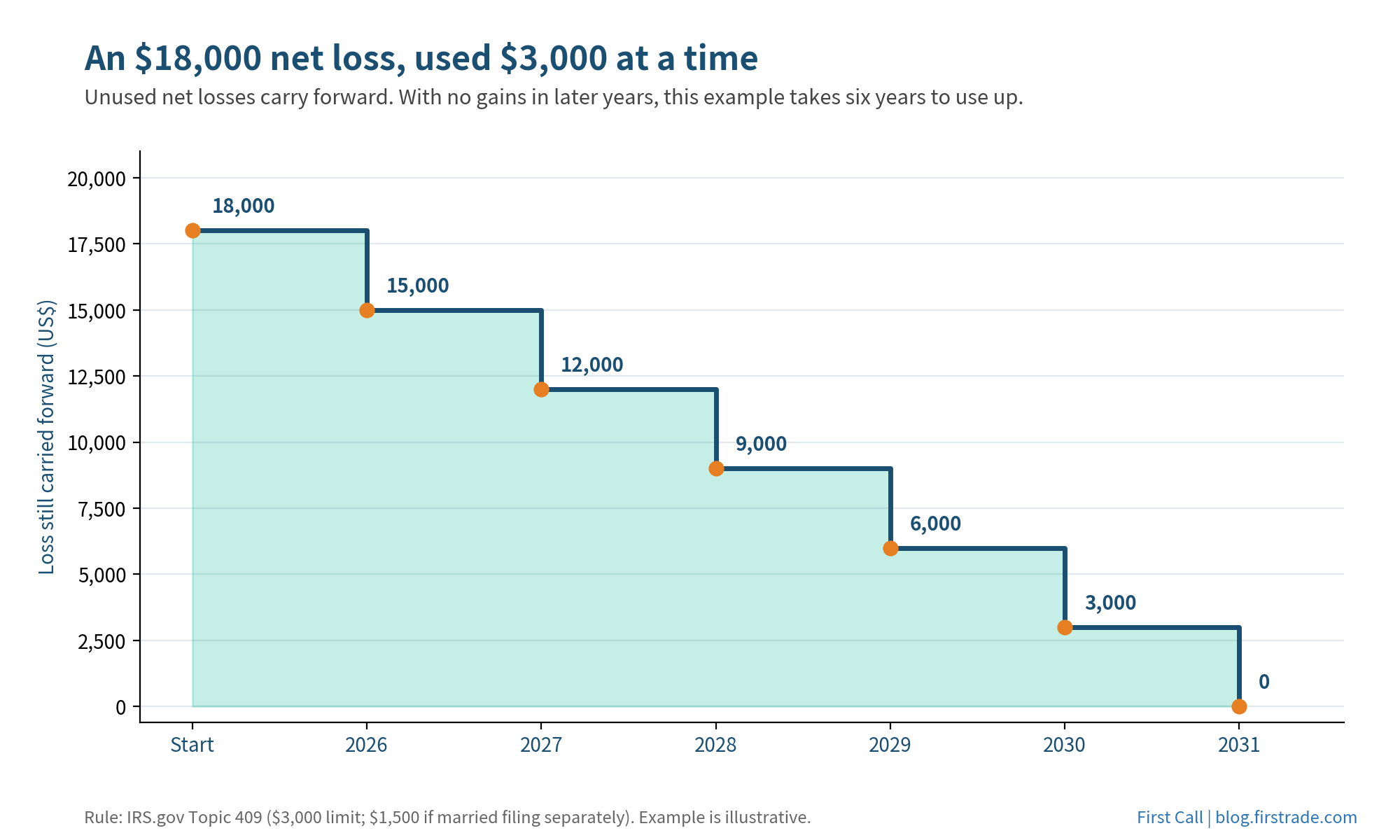
Size matters too. A net loss above the $3,000 limit is used up slowly. Chart 2 takes an $18,000 net loss, used $3,000 a year with no gains to absorb it: six annual returns. Carried-forward losses do not disappear, though they are not quick, and gains in later years would use them up sooner.
The catch is the wash-sale rule, Section 1091 of the Internal Revenue Code. If you buy substantially identical stock or securities within 30 days before or after the date of the sale, the loss is disallowed for now. Counting the sale day itself, that is a 61-day window. A position sold at a loss on December 15 has a window that runs from November 15 through January 14, so a purchase made in early November already counts. The disallowed loss is not gone: the code adds it to the cost basis of the replacement shares, which defers the benefit rather than erasing it.
Two practical points follow. The rule is about what you purchase, not which account you purchase it in, so the check should cover every account you hold; a tax professional can say how retirement accounts and a spouse's accounts are treated. And automatic dividend reinvestment is also a purchase, which is how some investors run into the rule without placing a trade.
Four Steps: What to Check Before Year-End
The check is four lookups and one piece of subtraction. None of it requires deciding anything yet.
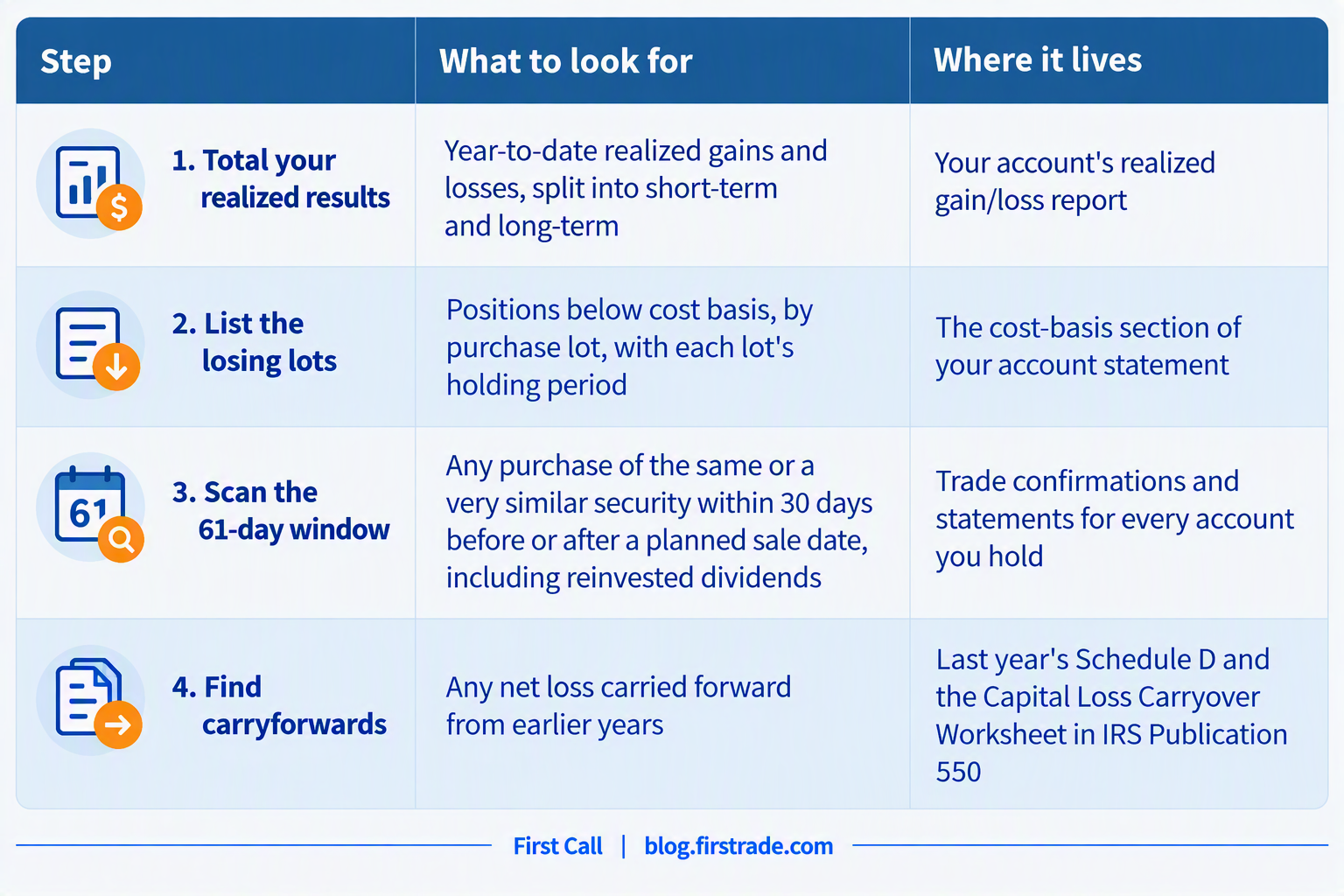
Step 2 is where the plan either works or does not. Realizing a loss means a trade, and a plan that also involves a replacement holding means two. Firstrade charges $0 commission on online U.S. stock, ETF, mutual fund and options trades, which keeps the cost of the adjustment from eating into the tax benefit it is meant to capture.
This list does not say which position to sell, or whether to sell any. Whether a loss is worth realizing depends on your whole tax picture, and that question belongs with a tax professional.
Frequently Asked Questions
Does the wash-sale rule stop me from ever owning the same security again?
No. While a purchase falls inside the 61-day window, the loss on the earlier sale is disallowed for now, and the disallowed amount is added to the cost basis of the new shares.
What counts as “substantially identical”?
The statute gives no list. Shares of the same company clearly qualify; whether two different funds that follow similar indexes do is a judgement question where a tax professional's view is worth having.
Do capital losses expire?
Not under the rules described on IRS Topic 409: a net loss above the annual limit carries forward to later years.
Where to Start
Going through the four steps with your statements in hand takes an evening, and it leaves you knowing which numbers are still open before the year closes. A Firstrade account can be opened online, and 24/7 customer service is there if a date or a lot does not add up.
This article is for informational and educational purposes only and does not constitute investment, tax or legal advice, or a recommendation to buy or sell any security. Investing involves risk, including possible loss of principal. Tax rules, limits and thresholds change, and individual circumstances differ; consult a qualified tax professional. Firstrade Securities Inc. is a member of FINRA and SIPC. Firstrade does not provide tax advice.