The Nasdaq fell 4.5% last week and the S&P 500 lost 2%, while the Dow gained 0.7%, according to Yahoo Finance. This week, Meta and Tesla are both scheduled to report after the close on Wednesday, October 21, and hundreds of other companies report too. Earnings usually land when regular trading is closed, so the next price a stock trades at can sit far from the last one. If you have orders waiting in your account, this is the week to know what they would actually do. Here is how to check them in four steps.
What Happened Last Week
The pressure came from technology. Investors grew doubtful that heavy AI spending will earn adequate returns, and chip and data-center stocks led the decline. A hotter-than-expected September CPI report, released Wednesday, October 14, added to it: headline inflation ran at 3.7% against a 3.6% forecast, and the 10-year Treasury yield rose as high as about 5.33% that day before easing to a little above 5.09% on Friday.
On Friday, October 16, the Nasdaq fell 2.1% and the S&P 500 fell 1.2%.
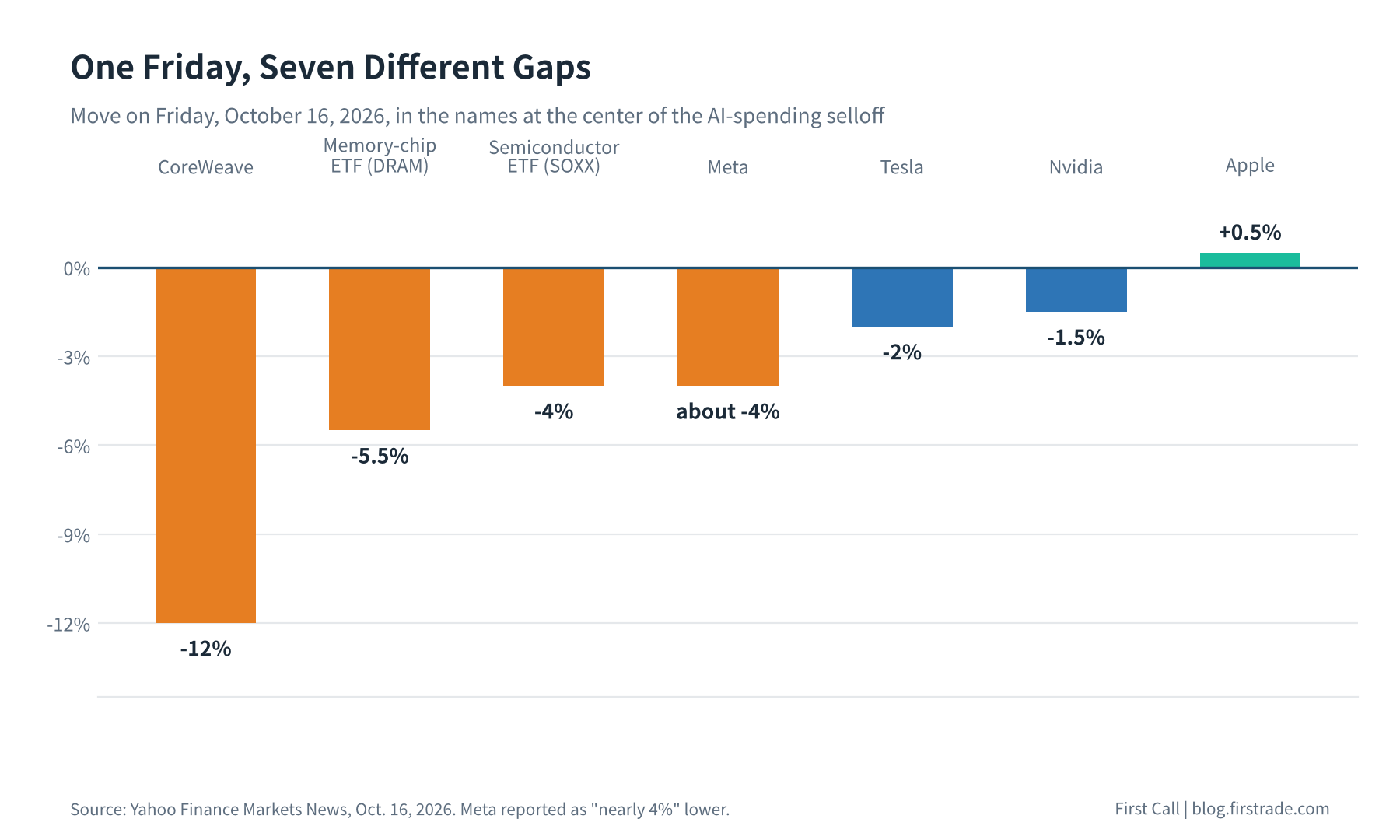
Chart 1: One-day moves on Friday, October 16, 2026. Source: Yahoo Finance Markets News.
Chart 1 shows how uneven that day was. CoreWeave fell 12%, Meta nearly 4%, Tesla 2% and Nvidia 1.5%, while Apple edged up 0.5%. A move like Friday's happens while the market is open, so an order can react to it as it unfolds. An earnings report is different. Meta releases its results after the close, with its call at 4:30 p.m. Eastern, so nobody can trade through the news. The price simply reopens somewhere new.
What a Gap Does to an Order You Already Placed
A price gap is the jump between one session's last trade and the next session's first. An order placed in advance meets that jump with no say in the matter, and its type decides what happens next. FINRA's order-type guidance puts it this way. A market order executes at or near the current price: it gives the most certainty of execution, but not of price. A limit order executes only at its limit price or better, so it controls the price but may never fill. A stop order waits for its stop price and then turns into a market order. A stop-limit order turns into a limit order instead, which adds price control and fill risk together.
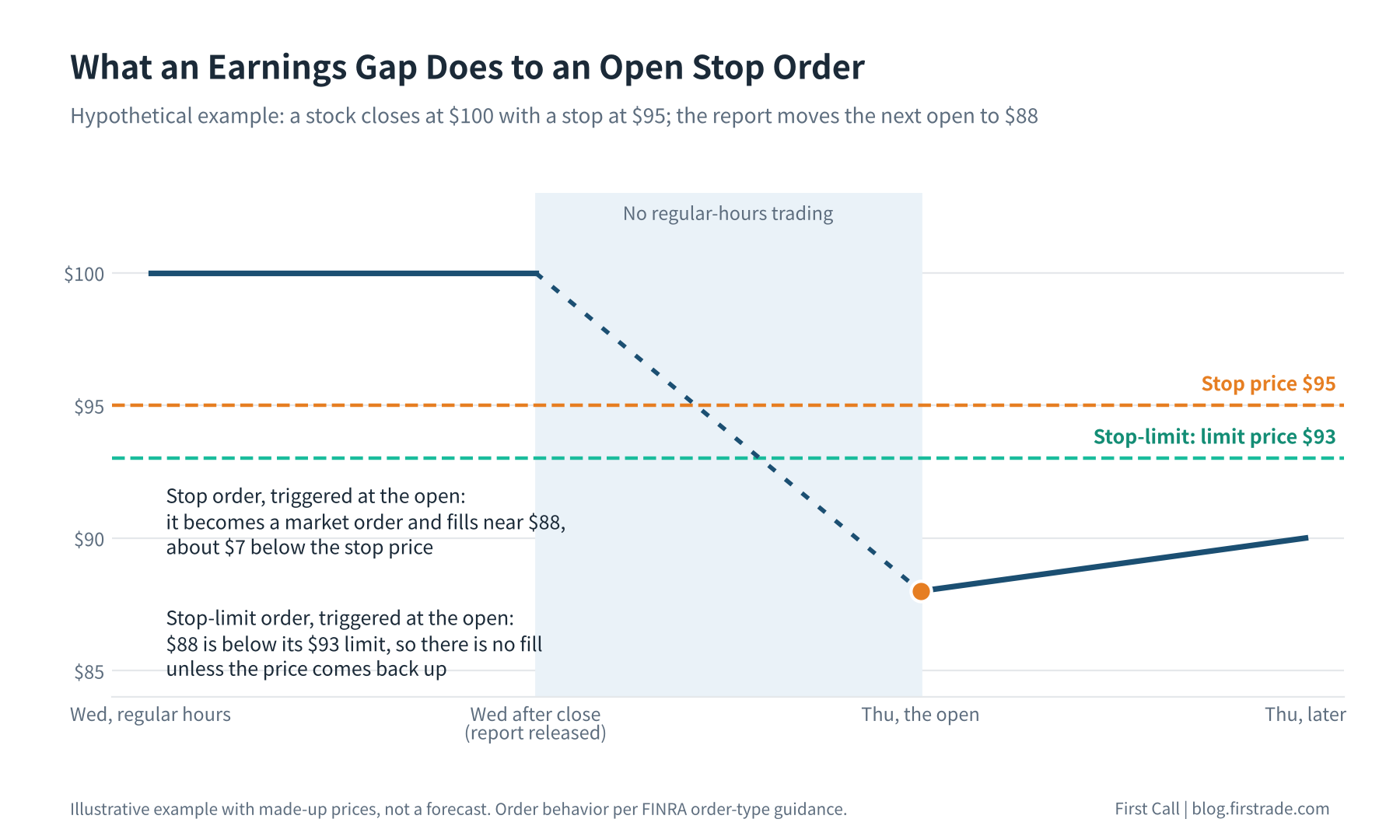
Chart 2: Hypothetical example with made-up prices, not a forecast. Order behavior per FINRA order-type guidance.
Chart 2 puts the two stop types side by side. A stock closes Wednesday at $100 with a stop at $95, and the report moves Thursday's open to $88. The stop is triggered at the open and becomes a market order, so it fills near $88, about $7 below the stop price, because nothing traded in between. A stop-limit order with a $93 limit is triggered too, but $88 is below its limit, so it waits unfilled unless the price climbs back. Neither result is a malfunction; each order did what it was written to do. Investor.gov makes the same point about stop orders: in a fast-moving market, the price they execute at may differ from the stop price.
Duration matters as well. FINRA notes that a day order expires at the end of the trading day, while a good-'til-canceled (GTC) order stays in effect until it is executed or canceled. A GTC stop placed three weeks ago may still be waiting on Wednesday night, and it is easy to forget that it exists. If it is unclear what a particular order will do, that is a fair question to put to a broker rather than guess at, and Firstrade offers 24/7 customer service.
Four Steps to Check Your Open Orders
Set aside twenty minutes before Wednesday's close. The check is about reading what you already have, so nothing new needs to be placed.
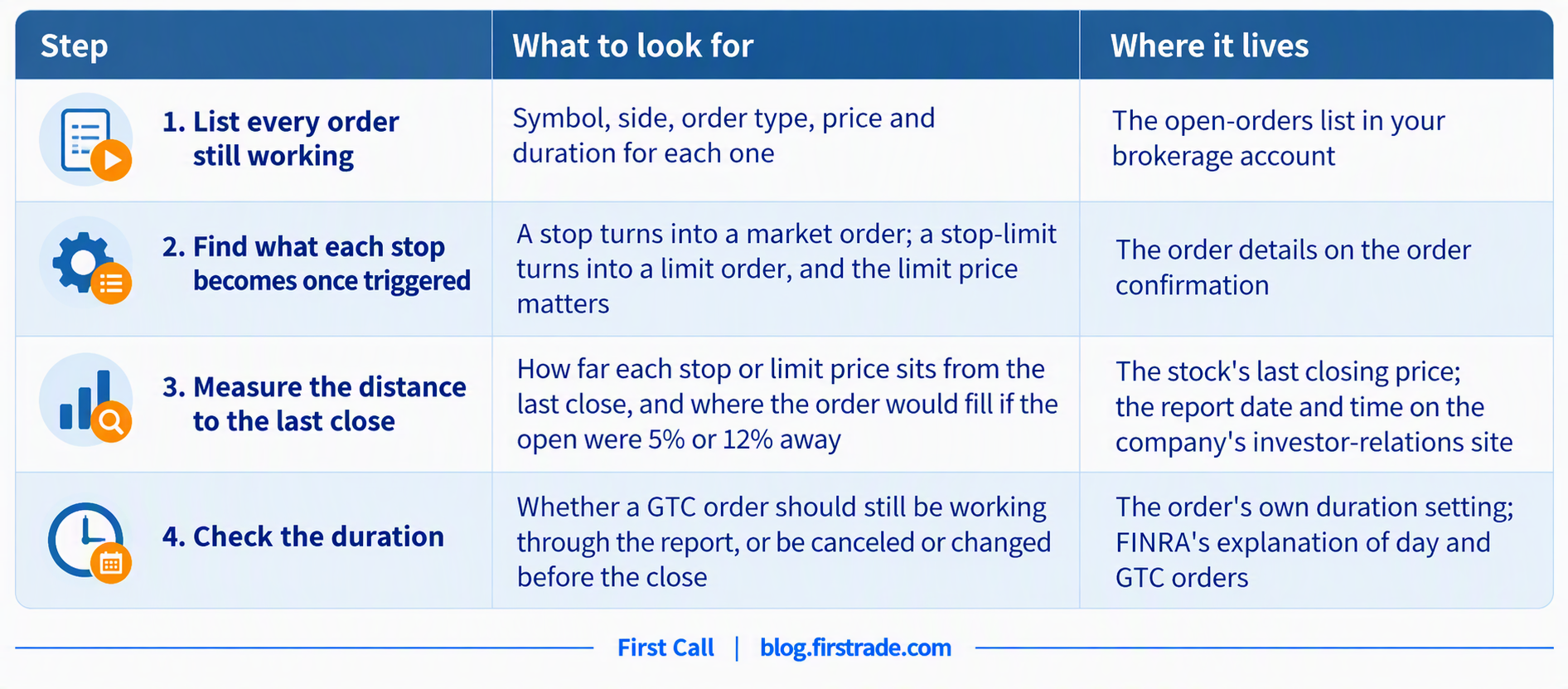
Step three is where the arithmetic sits. For example, take a stop at $95 on a stock that last closed at $100. A 5% gap lands exactly at $95 and the stop works as designed. A 12% gap opens at $88, seven dollars past it. Neither number is a prediction about any company; they only show how much the same order's result changes with the size of the gap. Adjusting orders across several holdings is easier to approach when trading itself carries no commission, and Firstrade offers $0 commission on online U.S. stock, ETF, mutual fund and options trades.
FAQ
What is a price gap?
It is the difference between a stock's last trade in one session and its first trade in the next. News released while the market is closed, such as earnings, is a common cause.
Does a stop order guarantee the price I set?
No. Once triggered, a stop order becomes a market order and can execute away from the stop price. A stop-limit order controls the price, but it may not fill at all.
Can orders trade after the close?
FINRA describes regular hours as 9:30 a.m. to 4 p.m. Eastern and cautions that orders placed outside them may face price changes when the market reopens. Whether extended-hours trading is available, and for which order types, depends on the broker, so ask before relying on it.
When do Meta and Tesla report?
Meta announced that it will release third-quarter results after the close on Wednesday, October 21, with its call at 4:30 p.m. Eastern. Market calendars list Tesla for the same evening.
The Short Version
Twenty minutes with your open orders replaces a guess with a number: where each one would land if Wednesday's reports move the open far from the last close. Orders can only be reviewed in the account that holds them, and a Firstrade account can be opened online, so the same check is available in any account you add.
This article is for informational and educational purposes only and does not constitute investment, tax or legal advice, or a recommendation to buy or sell any security. Investing involves risk, including possible loss of principal. Rules, rates and thresholds change, and individual circumstances differ. Firstrade Securities Inc. is a member of FINRA and SIPC. For commission and fee details, see Firstrade's pricing page at firstrade.com/trading/pricing.