
The Nasdaq Composite closed at 24,315.00 on November 5, 11.9% below its record close of 27,599.89 set on October 6, according to Federal Reserve data. A drop of 10% or more from a record is commonly called a correction, and by that measure this is the index's second correction of 2026.
For investors holding cash and waiting for the right moment, a correction tends to make the decision harder, not easier. Buying now feels risky; waiting feels like missing a rebound. A staged plan, investing equal amounts on set dates over several months, is a way to make that decision once instead of re-making it every time the market moves.
What Happened: A Correction Driven by AI Spending Worries
Reuters reported on November 5 that the slide reflected growing doubts about artificial intelligence spending. Several large technology companies have been borrowing to fund data centers and chips, and investors are questioning how quickly that spending will turn into profit. Elevated borrowing costs added pressure, with the 10-year Treasury yield spending much of the autumn near or above 5%. The following week brought another jolt to the sector: news on November 12 that Nvidia's chief executive was resigning, days before the company's quarterly report scheduled for November 17.
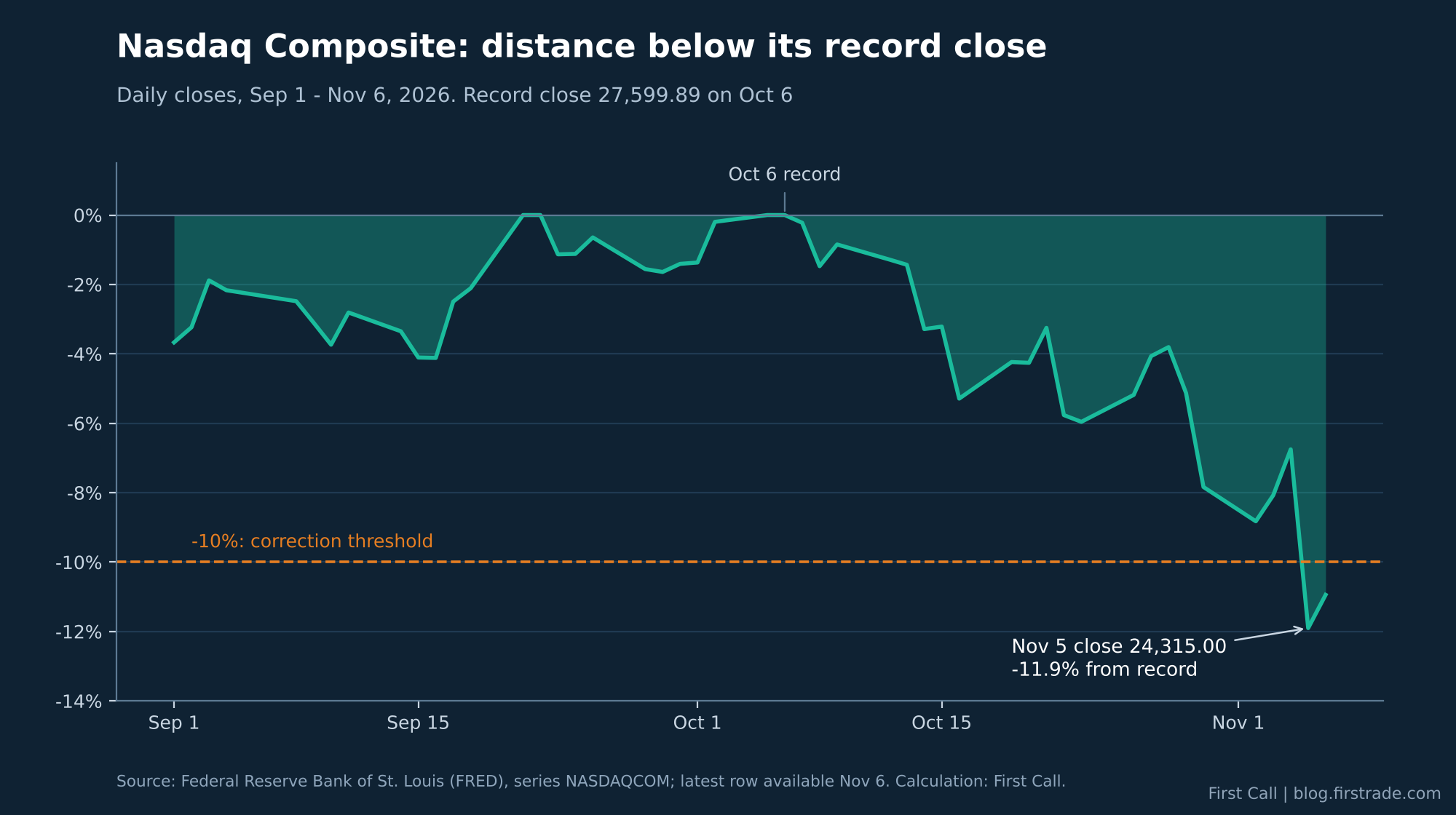
Chart 1: How far the Nasdaq Composite closed below its running record, September 1 to November 6, 2026. Source: FRED (NASDAQCOM); calculation by First Call.
The chart shows how quickly the distance from the record changed. The index was within 1% of its high in early October, about 6% below it in late October, and through the 10% line in a single session on November 5. Earlier this year the same index fell 12.8% from a late-January record to a March 30 low, then closed at a new record on April 15. That recovery is history, not a forecast; corrections can also deepen or last far longer.
What It Means If You Are Holding Cash
For a long-term investor, the question a correction raises is rarely whether this is the bottom, because no one knows that in advance. The more useful question is how to move cash into the portfolio in a way you can stick with whether prices keep falling or rebound sharply next month.
Investing everything at once and investing in equal installments each carry a cost. A single purchase puts the whole amount to work immediately, which helps if prices rise. Installments spread the purchase across several prices, which helps if prices fall first and limits the regret of buying everything just before a further drop. Chart 2 shows both sides with made-up prices: when the price dips and recovers, six monthly purchases end at an average cost of $94.23 a share against $100 for buying in month one, but when the price rises every month, the staged average is $107.26.
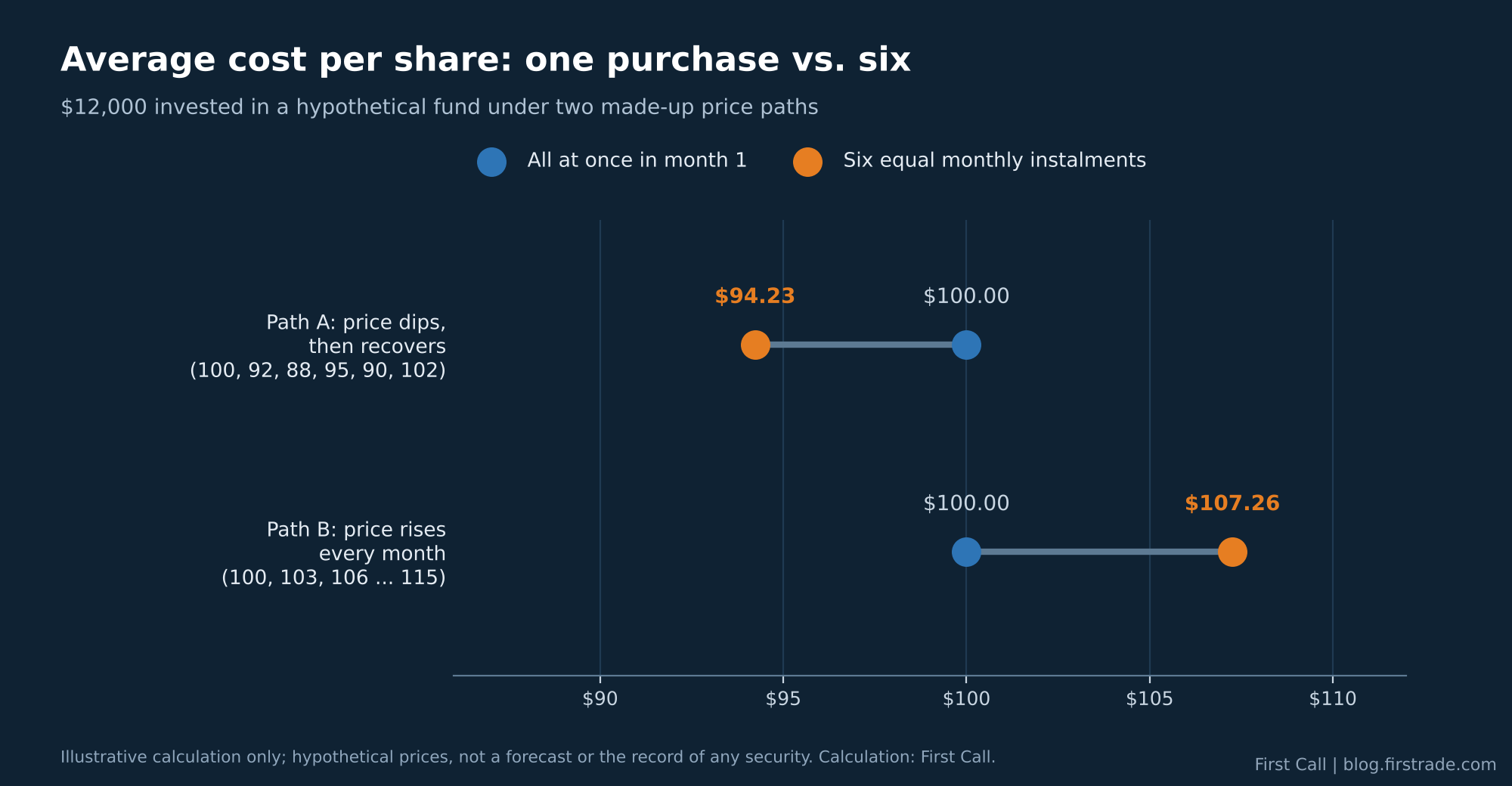
Chart 2: Average cost per share for $12,000 invested at once or in six monthly installments, under two hypothetical price paths. For illustrative purposes only and does not represent a real investment. calculation by First Call.
either result is guaranteed, and markets have historically risen more often than they have fallen, which is the main argument against stretching a plan out too long. A staged plan is a tool for managing timing risk and your own reactions, not a way to raise expected returns.
It also helps to know where the decline actually happened before choosing what to buy. A correction in a technology-heavy index does not mean every sector fell by the same amount, and Firstrade's Sectors & Industries research tool charts performance data from the sector level down to individual companies on one page.
What to Do About It: Four Steps to a Staged Plan
A staged plan works because it is decided in advance. Writing it down before the first purchase is what stops it from turning into a series of daily judgement calls.
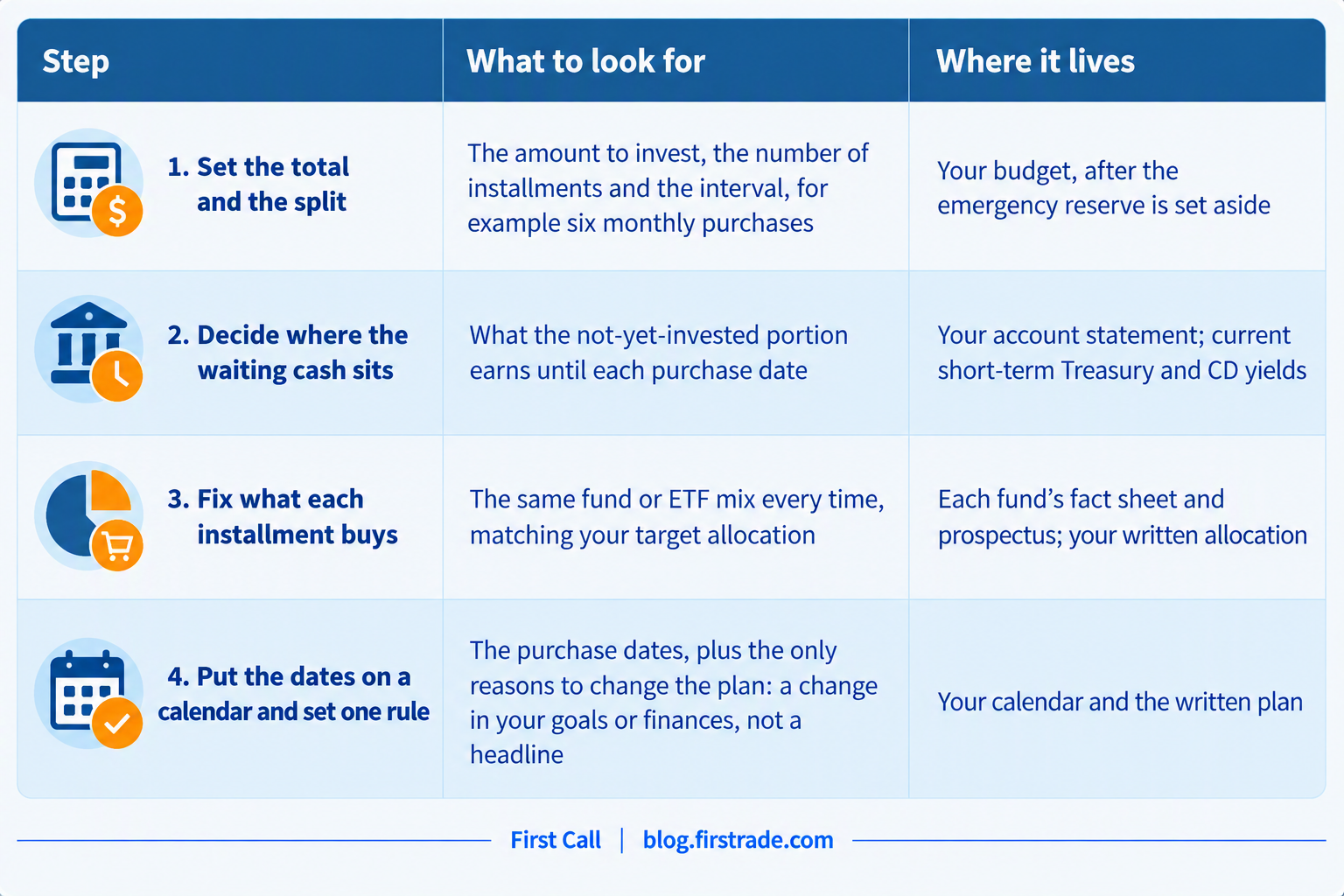
A few practical points. Three to twelve months is a common range for a staged plan; much longer and more of the money spends more time out of the market. Installments do not have to be identical, but resizing them after every market move defeats the purpose. And the plan needs an end date, so the cash does not quietly stay on the sidelines indefinitely.
Splitting one purchase into six also means six trades instead of one, which is why trading costs matter for this approach. Online trades of U.S. stocks, ETFs, mutual funds and options at Firstrade carry $0 commission, so the size of each installment can be set by the plan rather than by commissions.
Frequently Asked Questions
Is dollar-cost averaging better than investing a lump sum?
Not on average. Because markets have tended to rise over long periods, money invested earlier has usually had more time to grow. Staging gives up some expected return in exchange for a lower chance of investing everything just before a further decline. Whether that exchange is worth it depends on how you would react to a large loss soon after investing.
What is a market correction?
A decline of 10% or more from a recent closing high. A drop of 20% or more is usually called a bear market. The Nasdaq Composite's November 5 close was 11.9% below its October 6 record.
Does a staged plan protect against losses?
No. It changes the average price paid, but it does not prevent a loss if prices fall and stay lower. It spreads timing risk; it does not remove market risk.
Write the Plan, Then Make the First Purchase
Writing down the total, the number of installments and the dates is a one-page exercise that takes most of the guesswork out of investing during a correction. A Firstrade account can be opened online; once it is funded, each scheduled purchase of U.S. stocks, ETFs or mutual funds is a $0-commission online trade, and 24/7 customer service is there if a question comes up between installments.
This article is for informational and educational purposes only and does not constitute investment, tax or legal advice, or a recommendation to buy or sell any security. Investing involves risk, including possible loss of principal. Market figures are as reported by the cited sources at the time of writing. Firstrade Securities Inc. is a member of FINRA and SIPC. See Firstrade Pricing page for more complete information.