The Fed's Next Move: What the Shifting Rate Outlook Means for Your Money in 2026

The Fed rate outlook is once again the question hanging over markets in 2026. The federal funds target range has sat at 3.50%–3.75% since December 2025, following a series of cuts that brought rates down from their 5.25%–5.50% peak. The next FOMC decision lands September 15–16, and investors, economists, and the Federal Reserve itself do not fully agree on what comes next. Here is where things stand — and what different rate paths could mean for cash, bonds, and stocks.
Where Interest Rates Stand Now
After holding rates at a two-decade high through most of 2024, the Fed delivered an initial round of cuts in late 2024, paused for much of 2025, then resumed easing in the fall — leaving the target range at 3.50%–3.75%, where it remains today. Policymakers have also had to navigate an unusual handicap: a 43-day government shutdown disrupted the flow of official economic data, leaving gaps in the statistics the Fed normally relies on to judge inflation and employment.
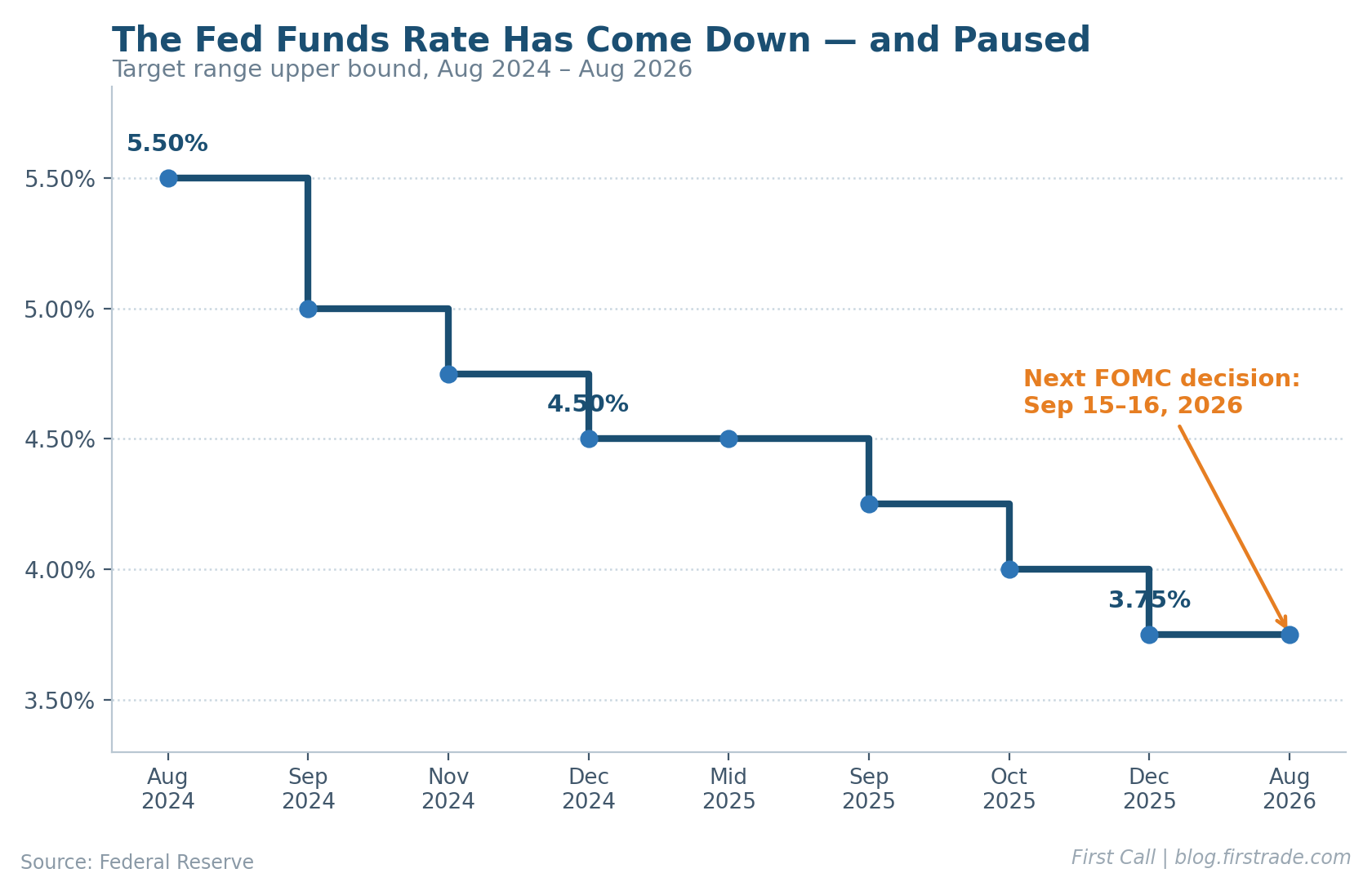
The fed funds target has fallen 175 basis points from its peak. Source: Federal Reserve.
Will the Fed Cut Rates Again in 2026?
This is where views split. The Fed's own Summary of Economic Projections has penciled in roughly one additional cut in 2026 — a deliberately cautious path reflecting lingering inflation risks. Market pricing, as measured by tools like CME FedWatch, has leaned more aggressive at times, implying two or more cuts by year-end, with a September move viewed as a strong possibility. Economists surveyed by Reuters are similarly divided, and some large forecasting shops have projected additional easing into 2027 while others see rates holding near current levels.
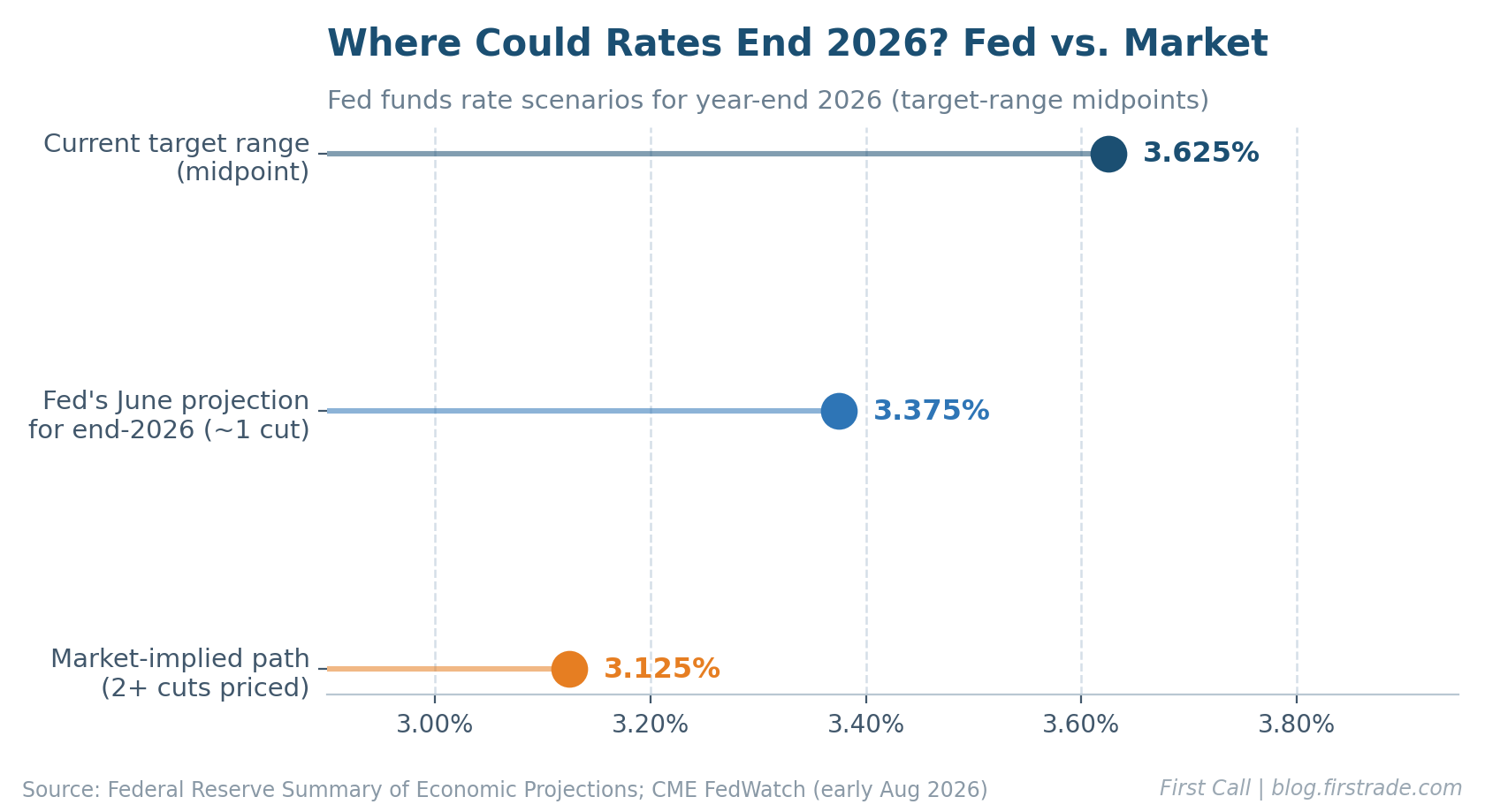
The Fed's projections and market pricing point to different year-end destinations. Sources: Federal Reserve SEP; CME FedWatch.
The honest summary: the direction of travel appears lower, but the pace and destination are genuinely uncertain — and rate expectations have swung repeatedly this year as new inflation data arrived.
What Falling Rates Could Mean for Your Portfolio
Interest rates are the gravity of finance: when they move, every asset class feels the pull differently. The table below summarizes the textbook relationships — keeping in mind that markets often price expected cuts before they happen, and actual outcomes can diverge.
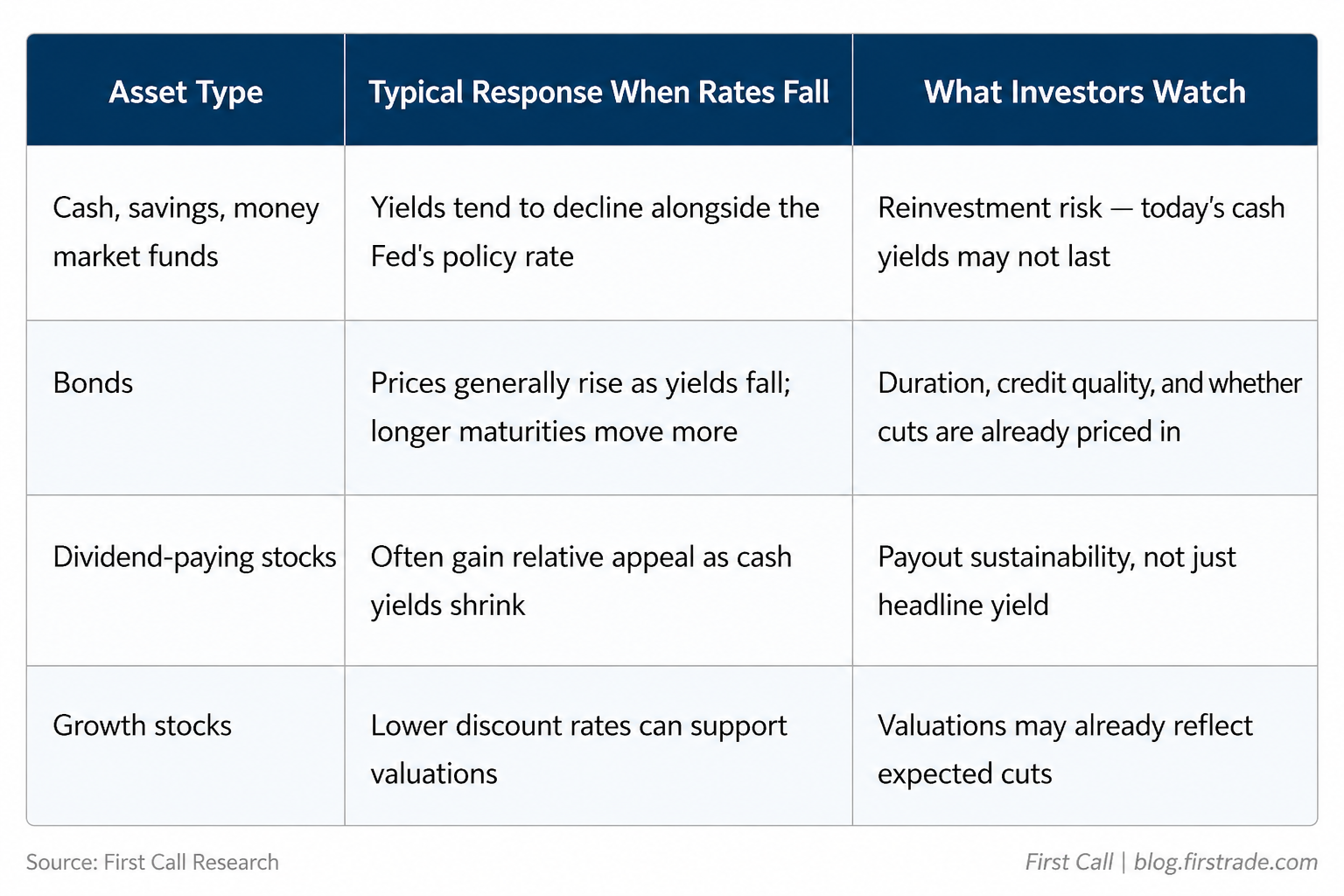
None of these relationships is mechanical. In 2026, for example, equities have responded as much to earnings and geopolitics as to rate expectations.
How Do Investors Prepare for Rate Uncertainty?
Research consistently suggests that predicting the exact timing of central bank moves is difficult even for professionals — which is why many long-term investors focus on positioning rather than prediction. Common approaches include matching bond maturities to actual spending needs, laddering CDs or Treasuries so that reinvestment happens gradually across different rate environments, keeping an appropriate emergency reserve regardless of yield, and rebalancing on a schedule rather than in reaction to Fed headlines. The September meeting will come and go; a portfolio built around personal goals is designed to work either way.
Key Takeaways
Rates have already come down 175 basis points from their peak, the Fed and the market disagree about how much further they fall, and September 15–16 is the next date that could reset expectations. For individual investors, the practical work is not guessing the Fed's move but understanding how each part of a portfolio behaves as the rate environment shifts.
Staying flexible through a rate cycle should not require paying for every adjustment. Firstrade offers zero-commission trading on U.S. stocks, ETFs, mutual funds, and options — with no options contract fees — and 24/7 customer service, so questions get answered even when Fed news breaks outside market hours.
Disclosures: This article is for educational and informational purposes only and does not constitute investment advice or a recommendation to buy or sell any security. All investing involves risk, including the possible loss of principal. Past performance does not guarantee future results. Firstrade Securities Inc. is a member of FINRA and SIPC.