Oil Price Volatility and Your Portfolio: Hedging Strategies for the 2026 Energy Shock

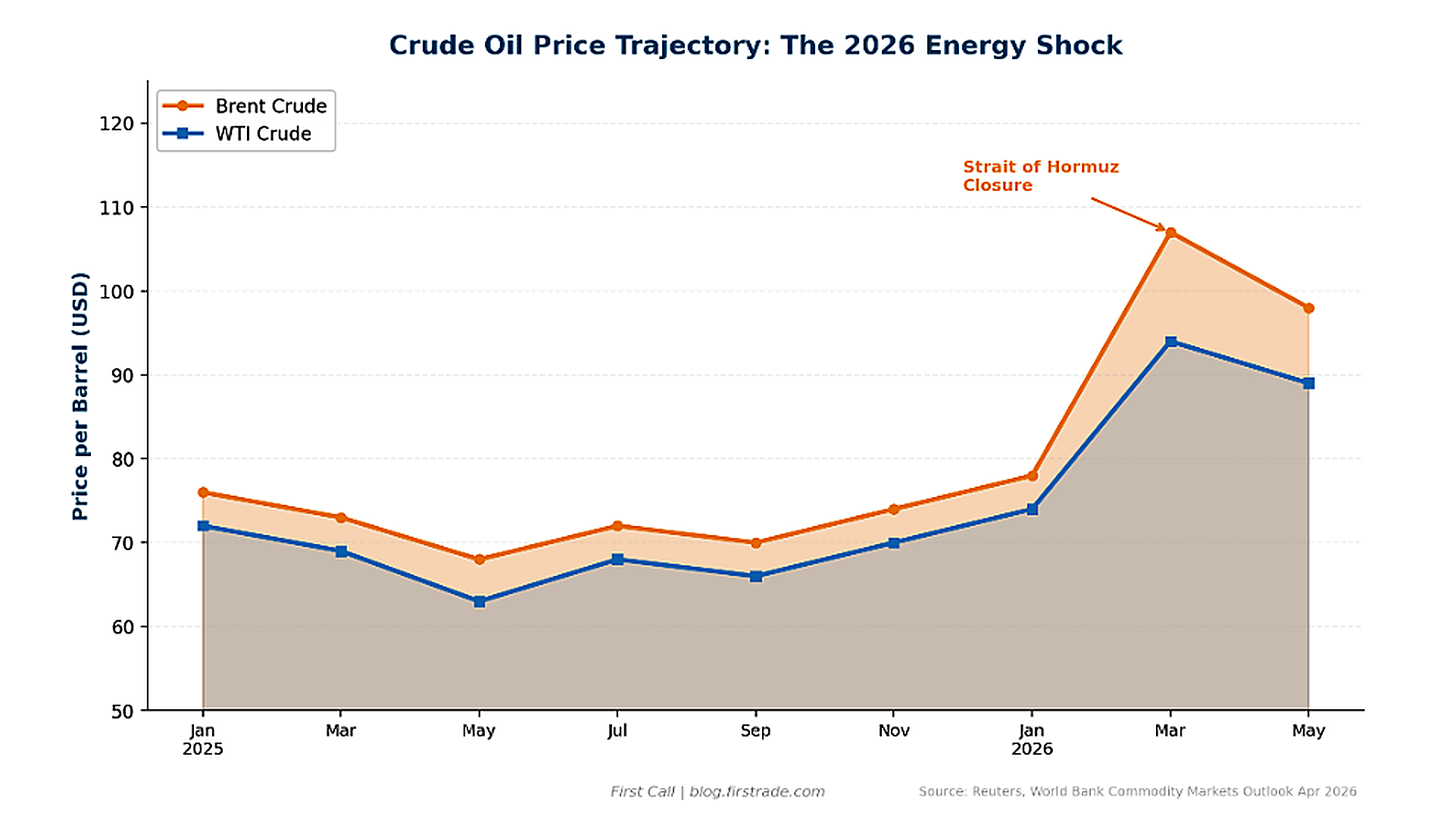
Crude oil prices have surged dramatically in 2026, with Brent crude reaching $107 per barrel in March — a rise of more than 76% since late February — following the escalation of the Middle East conflict and the closure of the Strait of Hormuz. The International Energy Agency (IEA) has characterized this as the largest supply disruption in the history of the global oil market. For retail investors, the question is no longer whether energy prices will affect their portfolios, but how to position for continued oil price volatility while managing downside risk.
What Is Driving the 2026 Oil Price Surge?
The primary driver of the current energy shock is the military conflict in the Middle East, which has disrupted shipping through the Strait of Hormuz — a critical chokepoint through which approximately 20% of the world’s oil supply passes daily. The closure of this strait has removed a significant volume of crude from global markets, creating a supply deficit that has pushed prices to levels not seen since 2022.
According to the World Bank’s Commodity Markets Outlook released in April 2026, energy prices are projected to surge by 24% in 2026 to their highest level since Russia’s invasion of Ukraine. This is compounded by the Federal Reserve’s decision to hold interest rates steady at 3.50–3.75%, as higher energy costs feed into broader inflation concerns, limiting the central bank’s ability to cut rates.
How Do Rising Oil Prices Affect Your Investment Portfolio?
Energy price shocks ripple through the economy and financial markets in several ways. Higher oil prices increase input costs for businesses, which can compress profit margins and weigh on corporate earnings. Transportation, manufacturing, and consumer discretionary sectors are typically the hardest hit, while energy producers and related industries tend to benefit.
For bond investors, rising oil prices can push inflation expectations higher, leading to upward pressure on yields and downward pressure on bond prices. The Fed’s cautious stance — holding rates steady despite softening economic data — reflects the tension between supporting growth and containing inflation fueled by energy costs.
Portfolio Hedging Strategies for Energy Price Uncertainty
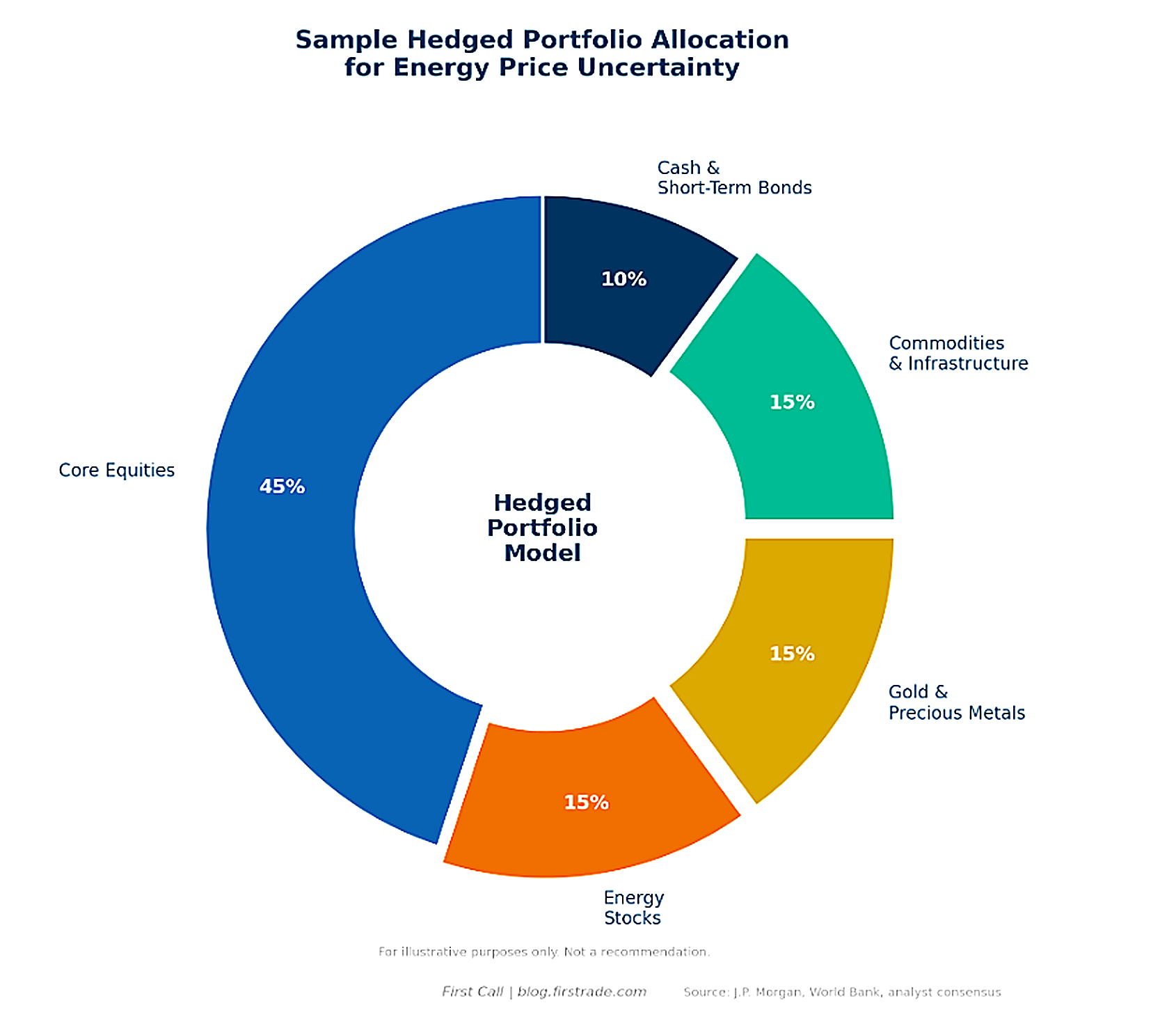
Financial institutions and analysts have outlined several strategies that retail investors can consider to help manage risk and position their portfolios during periods of elevated oil price volatility. The following approaches represent a spectrum from conservative to more active positioning.
1. Diversify Into Commodities and Real Assets
Commodities have historically served as a natural hedge against energy price inflation. Broad commodity exposure — through diversified commodity funds or ETFs — can provide portfolio ballast when oil prices are rising. Real assets such as infrastructure, timber, and transportation assets also tend to perform well during inflationary periods, as their revenues are often linked to price levels.
2. Consider Energy Sector Exposure
Energy stocks have been among the strongest performers in 2026. Companies with strong balance sheets and growing dividends can serve as a portfolio hedge against rising oil prices, as their revenues directly benefit from higher energy prices. However, energy stocks also carry geopolitical risk, and investors should evaluate individual company fundamentals rather than chasing sector-wide momentum.
3. Allocate to Gold and Precious Metals
Gold prices have risen significantly in 2026, with precious metals prices forecast to increase 42% according to the World Bank, driven by demand for safe-haven assets amid geopolitical uncertainty. Gold has historically performed well during periods of rising inflation and market stress, making it a potential valuable diversifier in a hedged portfolio.
4. Maintain Cash and Short-Duration Bonds
Holding a portion of your portfolio in cash or short-duration bonds may provide flexibility to take advantage of market dislocations and helps reduce overall portfolio volatility. With the Fed holding rates at 3.50–3.75%, short-term instruments may offer reasonable yields while preserving capital and liquidity.
What Should Investors Avoid During Energy Shocks?
During periods of heightened volatility, it is equally important to know what not to do. Avoid making large, concentrated bets on oil price direction — commodity markets can reverse quickly when geopolitical situations evolve. Resist the urge to abandon your long-term investment plan in response to short-term headlines. And be cautious with leveraged energy products, which can amplify losses in volatile markets.
How Long Could This Energy Shock Last?
The duration of the current energy price disruption depends largely on the geopolitical situation in the Middle East and the pace of any diplomatic resolution. The World Bank has noted that if the conflict de-escalates, oil prices could retreat to the $75–85 range by late 2026. However, if disruptions continue or expand, sustained prices above $100 per barrel are possible into 2027.
The Federal Reserve’s response will also play a role. Markets are currently split on whether the Fed’s next move will be a rate cut or a hold, with some officials advocating for patience while others see the softening labor market as a reason to ease. This uncertainty adds another layer of complexity for investors navigating the current environment.
The Bottom Line
The 2026 energy shock has reminded investors that geopolitical risk is a real and present factor in portfolio management. By diversifying across asset classes, maintaining exposure to natural hedges like commodities and gold, and keeping a disciplined approach to risk management, retail investors can navigate oil price volatility without abandoning their long-term financial goals. The key is preparation, not prediction — building a resilient portfolio before the next shock, not scrambling to react after it arrives.
Disclaimer: This article is for educational and informational purposes only and does not constitute investment advice. Investing involves risk, including the possible loss of principal. Past performance does not guarantee future results. Diversification does not eliminate risks. Asset classes will vary significantly, and a positive outcome can never be predicted for any particular asset class or security. Investments concentrated in sector or specific industry may involve more volatility. Consult a qualified financial advisor before making any investment decisions. Firstrade Securities Inc. is a member of FINRA/SIPC.