2026 Retirement Contribution Limits: What Changed and How to Use the Rest of the Year

The 2026 retirement contribution limits raised the amount most savers can put into a workplace plan by $1,000, and they also quietly reshaped who qualifies for the largest catch-up contribution. With roughly four months left in the contribution year, understanding exactly which ceiling applies to you is the difference between using the full allowance and leaving part of it unused.
What the 401(k) Contribution Limit for 2026 Actually Is
The Internal Revenue Service set the 2026 elective deferral limit for 401(k), 403(b), most governmental 457 plans and the federal Thrift Savings Plan at $24,500, up from $23,500 in 2025. That figure covers what you personally defer from your paycheck. It does not include anything your employer contributes on your behalf, which is governed by a separate and much higher overall limit.
On the IRA side, the 2026 limit rose to $7,500, with a catch-up contribution of $1,100 available to savers who are 50 or older at any point during the calendar year. IRA limits are separate from workplace plan limits, so a saver with both accounts can fund both in the same year, subject to the deductibility and income rules that apply to each.
One detail that catches savers off guard: the elective deferral limit is per person, not per plan. If you changed jobs mid-year and contributed to two different 401(k) plans, both sets of deferrals count against the same $24,500 ceiling. The plans themselves have no way to see each other, so the reconciliation is yours to do.
Why Catch-Up Contributions Now Depend on Your Exact Age
For years the catch-up rule was simple: turn 50, contribute more. A provision in the SECURE 2.0 Act replaced that single step with a tiered structure. Savers age 50 and over can add the standard catch-up of $8,000 in 2026. Savers who turn 60, 61, 62 or 63 during the calendar year qualify instead for a higher catch-up of $11,250.
The word turn matters. Eligibility is based on the age you reach at any point during the year, not your age on January 1. It is also a window rather than a permanent upgrade: once a saver reaches 64, the allowance reverts to the standard catch-up amount. Plans are not required to offer the higher tier, so the practical first step is confirming with your plan administrator that the option exists in your specific plan document.
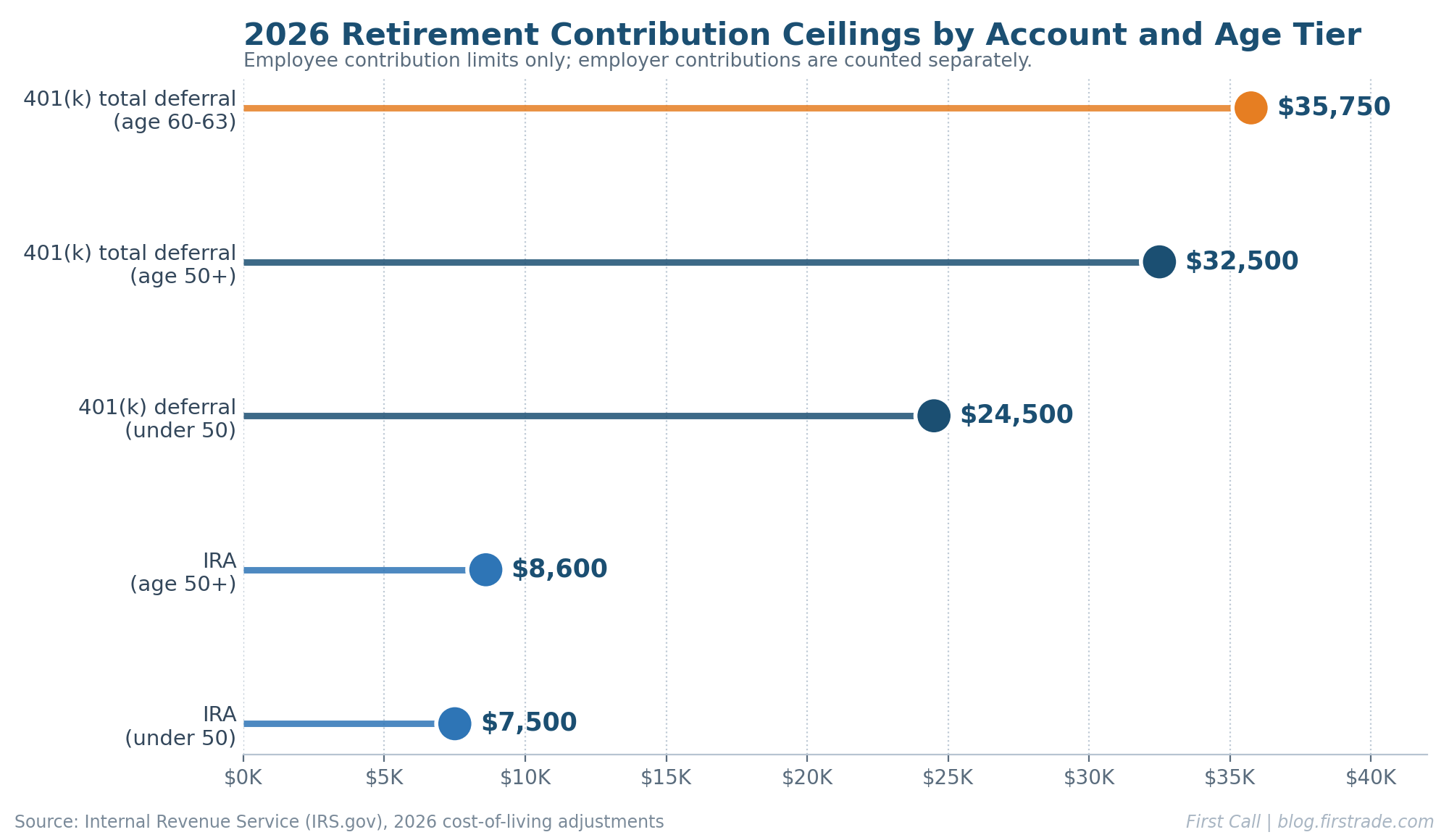
Chart 1: 2026 contribution ceilings by account type and age tier. Source: Internal Revenue Service (IRS.gov).
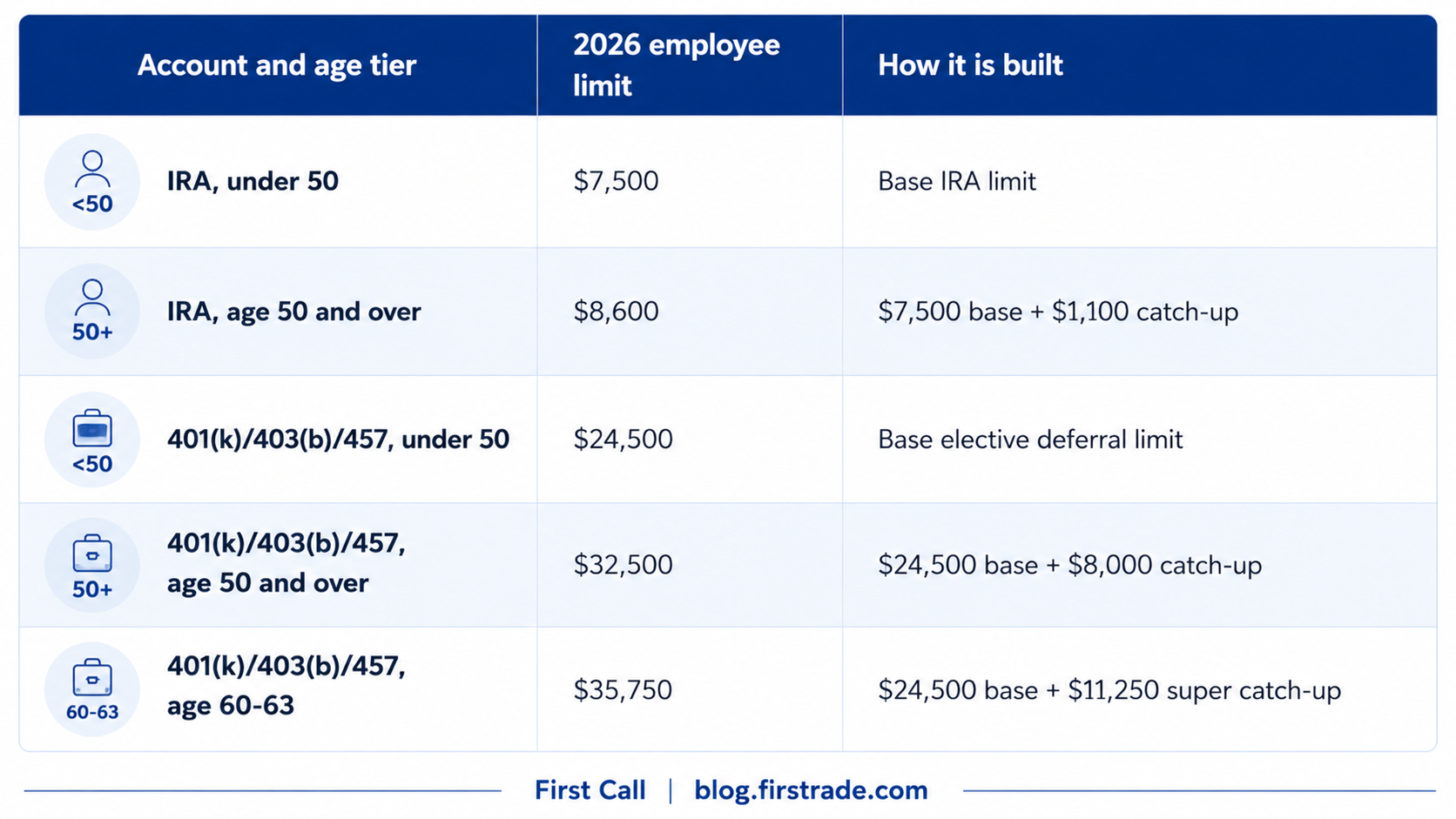
Figures reflect employee contributions only. Employer matching and profit-sharing contributions are counted under a separate combined limit.
How the Limits Have Drifted Higher Since 2020
Contribution limits are indexed to inflation, but they do not rise every year. The IRS adjusts them in $500 increments, which means a year of modest inflation can leave the figure unchanged while a year of higher inflation produces a visible step. The 2020 and 2021 limits were identical at $19,500; the 2022 and 2023 adjustments were far larger.
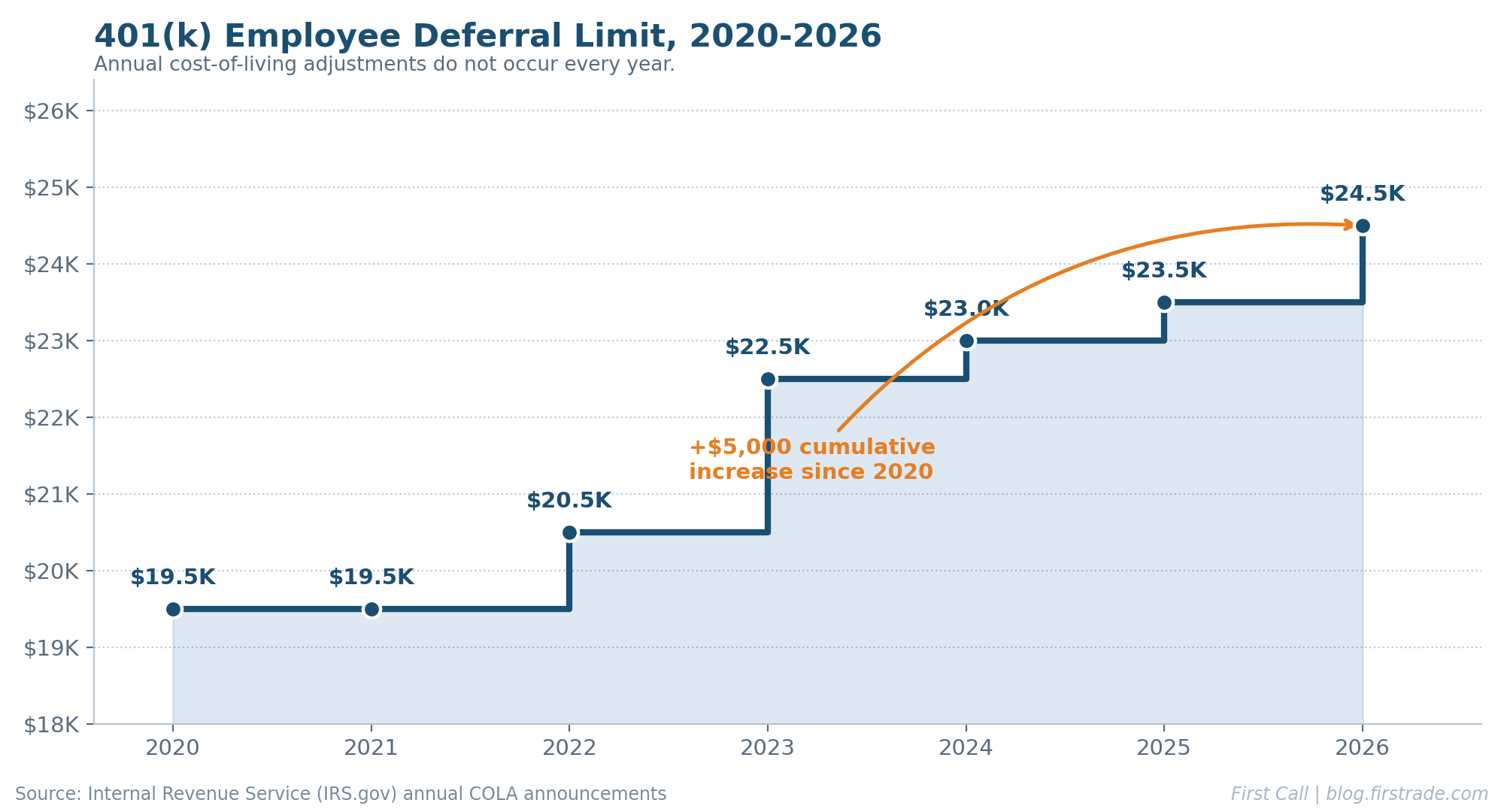
Chart 2: The 401(k) employee deferral limit, 2020 through 2026. Source: Internal Revenue Service (IRS.gov) annual COLA announcements.
The cumulative effect is meaningful. A saver contributing the maximum every year since 2020 has been allowed to shelter roughly $5,000 more annually by 2026 than at the start of the period. For anyone using a fixed-dollar payroll election set several years ago, that gap is easy to miss entirely, because the election does not update itself when the ceiling moves.
Traditional vs. Roth: A Structural Comparison
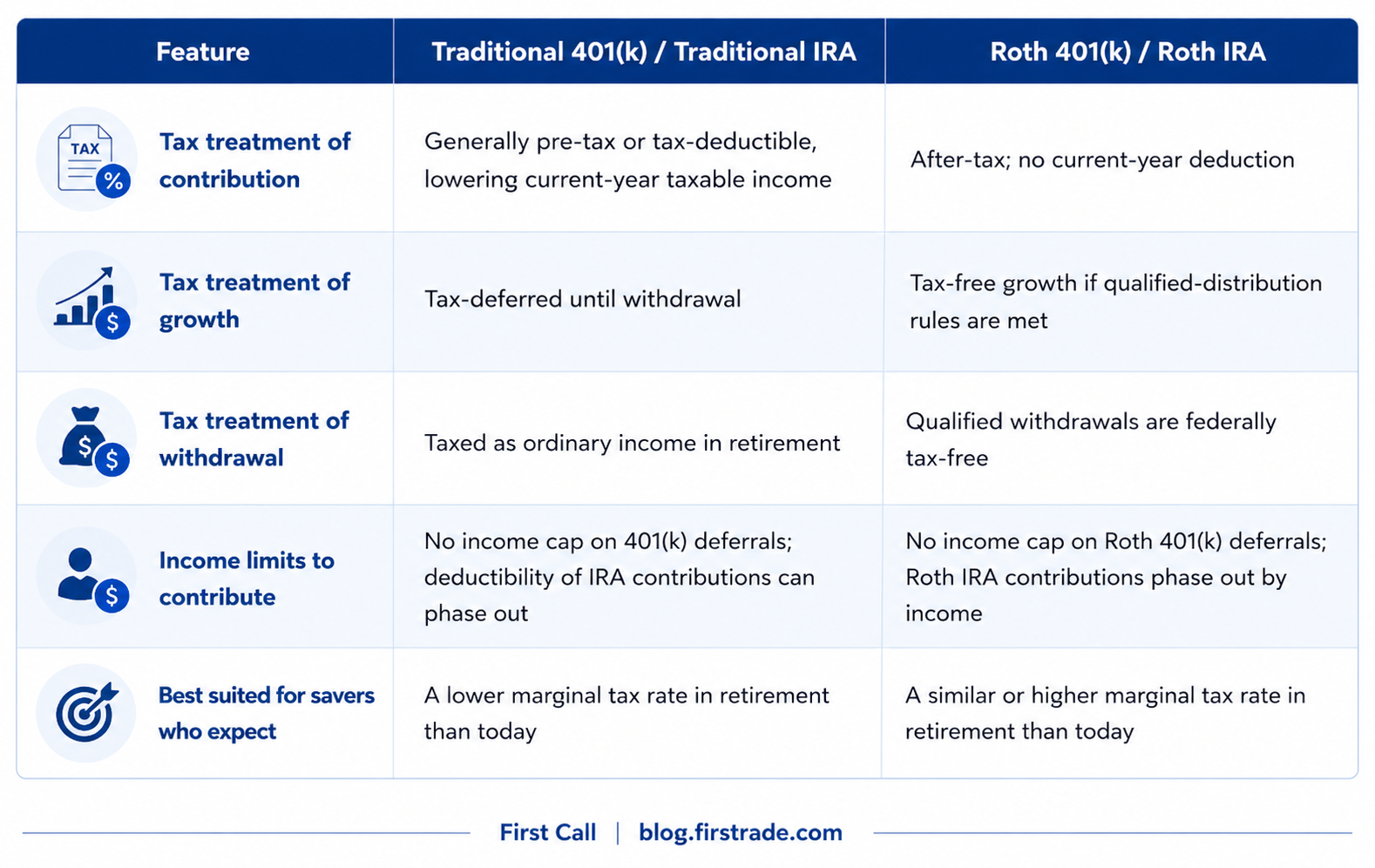
The contribution limit is the same regardless of whether you choose the traditional or Roth version of an account. What differs is when the tax is paid. The comparison below outlines the structural differences rather than prescribing a choice, since the right answer depends on an individual's current and expected future marginal tax rate.
Frequently Asked Questions About the 2026 Limits
When is the deadline to make 2026 contributions?
Workplace plan deferrals must come out of payroll by the final pay period of the calendar year, which in practice means the last election change needs to happen weeks earlier. IRA contributions for the 2026 tax year can generally be made until the federal tax filing deadline in April 2027, giving that account a longer runway.
Do employer matching contributions count against the $24,500 limit?
No. The elective deferral limit applies only to what the employee contributes. Employer contributions fall under a separate annual additions limit that covers the combined employee and employer total.
What happens if I contribute more than the limit?
Excess deferrals need to be identified and returned before the applicable correction deadline, or the amount can effectively be taxed twice. If you suspect you have over-contributed, particularly after a mid-year job change, raising it with your plan administrator early is far simpler than correcting it after year-end.
When will the 2027 limits be announced?
The IRS typically publishes the following year's cost-of-living adjustments in late October or early November, once September inflation data is final. Estimated adjustments often circulate before then, but the final figures are not confirmed until the IRS issues its official announcement.
Turning the Numbers Into a Plan
The limits are a ceiling, not a target, and the right contribution level depends on each saver’s cash flow, debt, emergency reserves and time horizon. What the calendar does offer is a natural checkpoint: verify the ceiling that applies to your age tier, check what you have contributed so far this year, and confirm your payroll election reflects the current figure rather than one set in a prior year.
Once contributions are set, the next question is what those dollars are invested in and what it costs to hold them. Firstrade offers commission-free trading on U.S. stocks, ETFs, mutual funds and options, with no options contract fees, so a larger share of each contribution stays invested rather than going to transaction costs. Firstrade customer service is also available 24/7, which helps when year-end account housekeeping happens outside market hours.
Disclaimer: This article is provided by First Call for educational and informational purposes only. It is not investment, tax or legal advice, and it does not constitute a recommendation to buy or sell any security. Contribution limits, catch-up eligibility and deadlines are governed by IRS rules that may change; consult a qualified tax professional regarding your own circumstances. Firstrade Securities Inc. is a member of FINRA and SIPC. Securities products are not FDIC insured, are not bank guaranteed and may lose value.